You scrub daily, but mysterious breakouts still appear on your back. Your old scrubber might be spreading bacteria instead of cleaning it. It is time to rethink your shower tool.
You should change natural loofahs and mesh poufs every 3 to 4 weeks. Cloth straps need replacing every 3 to 6 months. High-quality silicone body scrubbers last the longest and only require replacement every 6 to 12 months for optimal hygiene.

You trust your shower tools to keep your skin healthy and clean. However, keeping the same tool for too long quietly destroys your skin barrier and causes acne. Let me show you the hidden truth about your back scrubber so you can protect your skin from harmful bacteria.
Why Loofahs Need to Be Replaced So Often?
You love the rich lather of a loofah, but it starts smelling musty fast. This hidden odor means bacteria and mold are taking over your favorite tool.
Natural loofahs and mesh poufs must be replaced often because their porous fibers trap moisture, dead skin cells, and soap scum. This dark, damp environment breeds bacteria, mold, and yeast incredibly fast, making them unsafe for your skin.
In my decade of product curation, the traditional loofah is the most problematic item I encounter. People think natural materials are always better. This is a huge mistake in the damp environment of a bathroom. A natural loofah has a complex, sponge-like structure. When you use it, you force dead skin cells deep into these tiny holes. You leave it hanging in a warm, humid shower. This creates a perfect incubator for microbes.
Every time you wash with an old loofah, you wipe yesterday's bacteria back onto your open pores. This is the main reason my customers complain about sudden back acne. They blame their body wash, but the real enemy is their tool. To help you see the problem, I broke down what happens inside these porous materials over time.
| Material Type | Moisture Retention | Bacteria Growth Rate | Skin Risk Level |
|---|---|---|---|
| Natural Loofah | Very High | Extremely Fast | Severe (Acne, Infection) |
| Plastic Pouf | High | Fast | High (Irritation, Bumps) |
You cannot simply rinse these tools and expect them to be clean. The tiny fibers hold onto moisture for days. This rapid breakdown is exactly why you must throw them away every three to four weeks without hesitation.
What Makes a Non-Porous Scrubber Different?
You want a clean back without buying a new tool every month. A non-porous scrubber stops the endless cycle of replacing gross, moldy shower accessories.
A non-porous scrubber, typically made of medical-grade silicone, does not absorb water or trap dead skin. It dries in minutes, effectively preventing microbial growth. This unique material outlasts traditional porous tools by many months while keeping your skin perfectly safe.
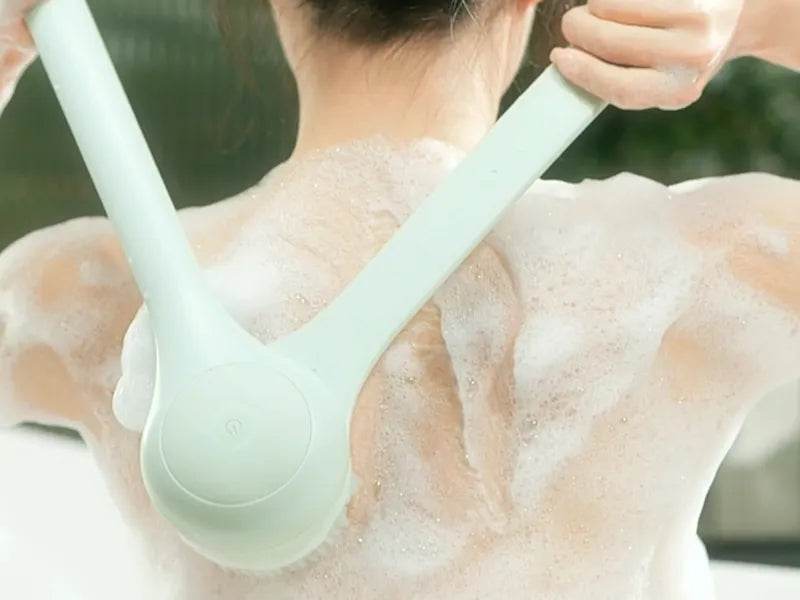
When I started developing the Ohxiyu electric body brush, finding the right material was my top priority. I tested hundreds of bristles. I needed something that would clean the skin but reject water. This is the fundamental difference between porous and non-porous materials. A non-porous material, like clinical-grade silicone, has a completely smooth surface at the microscopic level.
Water, oil, and dead skin have nowhere to hide. When you finish your shower, the water just slides off. The tool dries almost instantly. Bacteria and mold need water to survive and multiply. By removing the water, you eliminate the threat. This simple material change completely upgrades your daily routine.
| Feature | Porous (Loofahs/Sponges) | Non-Porous (Silicone) |
|---|---|---|
| Water Absorption | Soaks up water like a sponge | Repels water entirely |
| Drying Time | Takes hours or days to dry | Dries in just a few minutes |
| Hygiene Level | Breeds bacteria and mold quickly | Resists bacteria and mold naturally |
I always tell my clients to stop wasting money on tools that work against them. A non-porous silicone brush feels different at first because it does not hold lather the same way a sponge does. The trade-off is clear skin and a tool you can trust.
How Long does a Body Scrubber Last?
You spend good money on shower tools, but they wear out and break too quickly. Understanding the true lifespan of different materials saves you money and protects your skin.
The lifespan of a body scrubber depends completely on its material. Natural sponges degrade within weeks. Cloth straps last a few months if washed regularly. High-quality silicone scrubbers can easily last up to a year before the material begins to break down.
People often ask me why their body scrubber falls apart so fast. The answer is constant exposure to heat, water, and friction. No tool lasts forever in a shower environment. The raw materials dictate the exact timeline. I have audited the physical breakdown of these tools in our lab.
Natural fibers literally rot. The heat and water break down the plant material very quickly. Cloth straps are tougher, but the continuous stretching and machine washing eventually destroy the woven threads. Silicone is a synthetic rubber. It withstands high temperatures and aggressive friction without losing its shape.
| Scrubber Type | Physical Breakdown Cause | Average Lifespan |
|---|---|---|
| Natural Loofah | Rotting from constant dampness | 3 to 4 Weeks |
| Cloth Washcloth | Thread wear from washing machines | 3 to 6 Months |
| Silicone Brush | Gradual loss of bristle stiffness | 6 to 12 Months |
You must recognize the signs of physical wear. Even if a silicone brush resists bacteria, the bristles will eventually lose their firm texture. When the tool stops exfoliating effectively, its lifespan is over. You are just rubbing smooth plastic on your back. Always pay attention to the physical condition of the item, not just its age.
How often Should You Replace a Body Scrubber?
You forget when you bought your current brush, and it still looks fine to you. Relying on looks alone is a dangerous game for your skin health.
Replace natural loofahs and mesh poufs every 3 to 4 weeks. Replace cloth straps every 3 to 6 months, washing them after every few uses. You should replace silicone body scrubbers every 6 to 12 months to maintain proper exfoliation performance.
Creating a replacement schedule is the easiest way to prevent body acne. I never rely on my memory. I put a reminder on my phone. The visual appearance of a scrubber is very misleading. A loofah can look perfectly clean on the outside while a massive colony of bacteria grows near the center.
By the time you see black mold spots or smell a sour odor, you are already months late. You have been washing your body with mold. Strict timelines are necessary. We developed this replacement guide based on microbial growth tests, not visual estimates.
| Scrubber Material | Replacement Schedule | Warning Signs to Replace Early |
|---|---|---|
| Natural Loofah / Pouf | Every 3 to 4 Weeks | Sour smell, color changes, fraying |
| Cloth Strap / Washcloth | Every 3 to 6 Months | Holes, permanent stains, rough texture |
| Silicone Body Scrubber | Every 6 to 12 Months | Bent bristles, tearing, reduced performance |
If you have sensitive skin or active keratosis pilaris, you should replace your tools even sooner. Never stretch the timeline to save a few dollars. Your skin barrier is far more valuable. Treat your shower tools like a toothbrush. When the time is up, throw it out.
How to Keep It Clean Between Replacements?
You buy a great tool but leave it dripping on the shower floor. Poor daily maintenance ruins even the best scrubbers long before their scheduled replacement date.
To keep your scrubber clean, rinse out all soap and shake off excess water after every use. Hang it outside the damp shower stall to dry. Weekly, soak loofahs in a 10% bleach solution, or sanitize silicone tools by boiling them or using a dishwasher.
A replacement schedule only works if you perform basic daily maintenance. I see people leave their wet brushes flat on a shower shelf. This traps the water underneath and encourages mold. You must actively remove the water and soap residue.
Soap scum is a food source for bacteria. First, rinse the tool under clean, running water. Squeeze or shake it vigorously. Then, remove it from the shower entirely. The shower stall stays humid for hours. Hang your scrubber in a well-ventilated area to force fast drying. Besides daily habits, you need a weekly deep clean to reset the hygiene level.
| Maintenance Step | Frequency | Best Method |
|---|---|---|
| Rinse & Shake | After Every Use | Run under clear water and shake vigorously |
| Hang Dry | Daily | Hang on a hook outside the shower area |
| Deep Sanitize (Loofah/Cloth) | Weekly | Soak in 10% bleach solution for 5 minutes |
| Deep Sanitize (Silicone) | Weekly | Boil in water for 3 minutes or run in dishwasher |
Silicone tools give you a massive advantage here. You can literally boil them to kill all pathogens. You cannot do that with a plastic pouf without melting it. Proper maintenance extends the life of your tool and guarantees a safe, effective shower experience every single day.
Conclusion
Replace porous loofahs monthly, cloth straps twice a year, and silicone scrubbers annually. Proper daily drying and weekly sanitizing ensure your back scrubber prevents acne instead of causing it.