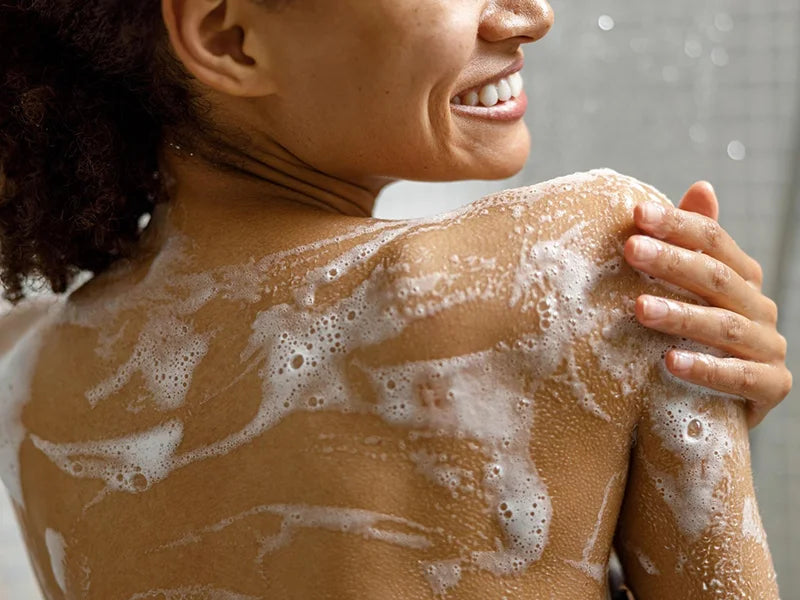
You struggle to reach that awkward spot between your shoulder blades, so you just let soap and water run down your back. But this neglect leads to frustrating bumps and breakouts.
To exfoliate your back, use a long-handled tool or a chemical exfoliant in the shower after your skin has warmed up for a few minutes. Use gentle, controlled motions and moisturize immediately after.

In my 10+ years developing personal care tools, I've learned that the back is the most commonly neglected part of the body. It’s a simple problem of reach, but it has real consequences. The skin there is thick and oily, making it a perfect place for pores to get clogged. Proper exfoliation is not about aggressive scrubbing; it’s about a smart, consistent technique. Getting this right is the key to finally achieving clear, smooth skin on your back. Let's walk through how to do it correctly.
Why your back needs exfoliation
You might think your back is fine, but you notice rough patches or random breakouts. This happens because soap and water alone aren't enough to clean this unique area of skin.
Your back needs exfoliation because its skin is thick and has a high number of oil glands. Without regular exfoliation, dead skin cells and oil build up, leading to clogged pores, a rough texture, and body acne.
The skin on your back isn't the same as the skin on your arms or legs. From a product development standpoint, we treat it almost like a different skin type entirely. It has a higher density of sebaceous (oil) glands, similar to your face, but the skin itself is much thicker. This combination creates a perfect storm. The thick top layer makes it harder for dead skin cells to shed naturally, and the excess oil acts like glue, trapping those cells and any sweat or dirt from the day. This buildup is what causes that bumpy texture, known as keratosis pilaris, and the inflamed breakouts we call "bacne." Regular exfoliation is the only way to break this cycle and keep the skin on your back clear and healthy.
| Feature | Facial Skin | Back Skin |
|---|---|---|
| Thickness | Thin and delicate | Thick and resilient |
| Oil Glands | High density | High density |
| Pore Size | Varies, can be large | Often larger, easily clogged |
| Main Concern | Sensitivity, wrinkles | Clogged pores, acne, roughness |
How to exfoliate your back in shower the right way
You grab a brush and start scrubbing your back aggressively, thinking harder is better. This only leaves your skin red and irritated, and the breakouts seem to get worse.
Start after your skin is warm, use a long-reach tool with controlled motions, and focus on bumpy areas but not active pimples. Always rinse well and apply a non-comedogenic moisturizer right after.

The goal of exfoliation is to remove dead skin, not to strip your skin barrier. I've seen so many people damage their skin by being too rough. A successful routine is about technique, not force. It's a precise process that respects your skin's natural functions. By following a few simple steps in the right order, you can get all the benefits of exfoliation without any of the damage. This method ensures you're working with your skin, not against it, to achieve a smooth, clear back.
1. Start after a few minutes of warm water
Let the warm shower run over your back for 3-5 minutes before you start. This softens the top layer of your skin (the stratum corneum) and opens up your pores, making it much easier and gentler to slough away dead skin cells.
2. Choose a tool that can actually reach
This is where a long-handled brush is essential. It allows you to apply even pressure across your entire back without straining your shoulders.
3. Skip heavy body wash right before exfoliating
Heavy, creamy body washes can leave a film on your skin that makes exfoliation less effective. Cleanse with a simple gel wash first, or apply your exfoliating product directly to damp skin.
4. Use long, controlled motions
Don’t scrub back and forth frantically. Use gentle, overlapping vertical or circular strokes. Let the tool do the work. If you're using an electric brush, there's no need to apply extra pressure.
5. Give extra attention to bumps and flakes, not active breakouts
Focus on areas that feel rough or bumpy. However, never physically scrub red, inflamed, or cystic acne. This can rupture the pimple, spread bacteria, and lead to more scarring.
6. Rinse well and moisturize right away
Rinse your back thoroughly to remove all the exfoliated skin cells. Then, within a minute of patting your skin dry, apply a lightweight, non-comedogenic lotion to lock in hydration and protect your newly exposed skin barrier.
The best way to exfoliate your back in shower depends on your skin
You tried the method your friend recommended, but it made your skin feel tight and dry. A one-size-fits-all approach to back exfoliation doesn't work because everyone's skin is different.
For oily or acne-prone skin, a chemical exfoliant with Salicylic Acid (BHA) is best. For dry or sensitive skin, a gentle silicone brush or a mild Glycolic Acid (AHA) lotion is safer.
In product curation, matching the product to the person is everything. The right exfoliation method for you depends entirely on your skin's needs and sensitivity levels. Using a harsh scrub on sensitive skin can lead to a damaged moisture barrier and more irritation. On the other hand, a super gentle method might not be enough to clear up congestion on very oily skin. Listening to your skin is the most important part of the process. The goal is to find the perfect balance that leaves your skin feeling smooth and refreshed, not raw and stripped. Choosing the right tool or ingredient is the first step toward achieving that balance.
| Skin Type | Best Method | Why It Works |
|---|---|---|
| Oily / Acne-Prone | Chemical (BHA/Salicylic Acid) | BHA is oil-soluble, so it can penetrate deep into pores to dissolve clogs and has anti-inflammatory properties. |
| Dry / Sensitive | Gentle Physical (Silicone Brush) or Chemical (AHA/Lactic Acid) | A soft silicone brush provides gentle exfoliation without scratching. Lactic acid is a milder AHA that exfoliates while hydrating. |
| Normal / Combination | Balanced Physical (Soft Bristle Brush) or Chemical (AHA/Glycolic Acid) | This skin type can handle a soft bristle brush or a standard glycolic acid wash to maintain smoothness and prevent occasional clogs. |
What to use for back exfoliation
The store aisle is overwhelming with loofahs, scrubs, and chemical washes. You are unsure what will be effective without being unhygienic or too harsh for your skin.
You can choose between chemical exfoliants (like AHA/BHA washes and sprays) and physical tools (like long-handled brushes). I often recommend starting with a gentle physical tool or a BHA wash for safety and effectiveness.
When I'm evaluating tools, I prioritize safety and efficacy. While grainy physical scrubs can feel satisfying, they often contain sharp, irregularly shaped particles that can cause micro-tears in the skin. This is why I tend to steer people toward chemical exfoliants or well-designed physical tools. Chemical exfoliants work by dissolving the "glue" that holds dead skin cells together. Physical tools, when made with soft, hygienic bristles like medical-grade silicone, can provide a fantastic and safe exfoliation. The key is choosing an option that you can use gently and consistently.
Chemical Exfoliants
- AHA (Alpha Hydroxy Acid): Includes glycolic and lactic acid. They are water-soluble and work on the surface of the skin. Great for improving texture and fading dark spots.
- BHA (Beta Hydroxy Acid): This is salicylic acid. It's oil-soluble, making it the best choice for getting deep into pores to clear out oil and prevent acne.
Physical Exfoliants
- Long-Handled Brushes: Essential for reach. Look for soft bristles or, even better, a silicone head, which is non-porous and resists bacteria growth.
- Body Scrubs: Use with caution. Choose scrubs with small, round, dissolvable particles like sugar, and never press hard.
Mistakes that make back exfoliation backfire
You've been exfoliating your back, but the skin is now red, oily, and breaking out more. You are likely making a common mistake that is damaging your skin's protective barrier.
The biggest mistakes are scrubbing too hard, exfoliating open or inflamed acne, using dirty tools, and skipping moisturizer. These actions trigger inflammation, spread bacteria, and compromise your skin's health.

Your skin has a natural defense system called the moisture barrier. When you exfoliate too aggressively, you destroy it. I've seen this happen countless times. A compromised barrier can't hold onto moisture, leading to dehydration. In response, your skin may panic and produce even more oil to compensate, which in turn leads to more clogged pores. It becomes a vicious cycle. The purpose of exfoliating is to gently assist your skin's natural shedding process, not to wage war on it. Avoiding these common mistakes is crucial for getting the results you want without causing collateral damage.
| Mistake | What Happens to Your Skin | What to Do Instead |
|---|---|---|
| Over-Scrubbing | Causes micro-tears and damages the skin barrier, leading to irritation and more oil. | Use gentle, controlled motions and let the tool or product do the work. |
| Scrubbing Active Acne | Spreads bacteria to other pores and can worsen inflammation and scarring. | Spot-treat active pimples with a BHA product and exfoliate around them. |
| Skipping Moisturizer | Leaves newly exfoliated skin dehydrated and vulnerable to irritation. | Always apply a lightweight, non-comedogenic lotion to damp skin post-shower. |
How often should you exfoliate your back?
You are unsure if you should exfoliate your back daily or weekly. Doing it too often leaves your skin feeling sensitive, but too little seems to have no effect.
You should exfoliate your back 1 to 3 times per week. The exact frequency depends on your skin type and the method you're using. Always start slow and pay attention to how your skin responds.
Consistency is more important than intensity. Your skin needs time to recover and regenerate between exfoliation sessions. A skin cell turnover cycle takes about 28 days, and exfoliation is just meant to help the final step along. Bombarding your skin daily, especially with a physical scrub, doesn't give it a chance to heal, leading to chronic irritation. I recommend starting with once a week. If your skin feels fine and you think you need more, you can slowly increase to 2 or 3 times. Oily, resilient skin might handle three times a week, while sensitive skin might be happiest with just one. If you ever see redness or feel stinging, that's your skin telling you to back off and reduce the frequency.
When back exfoliation gives the best payoff
You exfoliate in your morning rush, but wonder if there's a better time. To get the most benefit from your routine, timing can make a surprising difference.
Exfoliate in the evening after a workout. This timing helps clear away the sweat and grime from the day, and allows your skin to repair and absorb moisturizer overnight without sun exposure.
I'm a big advocate for timing your routine for maximum benefit. Exfoliating is particularly effective after you exercise because sweat can trap oil and bacteria on your skin. Clearing all of that out promptly prevents it from settling into your pores. The evening is the ideal time for the exfoliation itself. Why? Because exfoliation makes your skin temporarily more sensitive to the sun. By doing it at night, you give your skin a full night's recovery period. It's also when your body is in its natural repair mode, so your skin can make the most of the fresh surface and the moisturizer you apply. This is especially true during hot and humid summer months when you're sweating more and pores are more likely to get congested.
Conclusion
Proper back exfoliation is a simple, game-changing habit. Be gentle, stay consistent, and always hydrate afterward. This approach will transform a neglected area into the clear, healthy skin you deserve.