You feel huge, painful bumps on your back. You grab a stiff brush and scrub hard. You rupture the pimples and cause a terrible infection immediately.
A body brush helps prevent back acne on unbroken skin, but you must stop using it on active breakouts. Scrubbing inflamed pimples ruptures them and spreads bacteria. You should use a gentle silicone scrubber around clear areas and treat active acne with chemical exfoliants instead.

I spend every day testing skin-care tools in our Ohxiyu lab. People think they can scrub their back acne away with pure force. I want to show you exactly how physical friction destroys your skin barrier, and I will teach you the exact moment you must stop brushing.
Does a back scrubber help with acne?
You sweat in tight clothes all day. Your back pores fill with heavy oil. You notice small blackheads forming across your shoulders right now.
A back scrubber prevents future acne effectively by removing dead skin cells and excess sebum before they clog your pores. It keeps unbroken skin clear, but it will inflame existing pimples. You must only use physical scrubbers on smooth, non-inflamed areas of your back.
The Double-Edged Sword of Exfoliation
I evaluate dermatological science closely. Using a body brush for back acne acts as a double-edged sword. You have highly active sebaceous glands on your back. These glands pump out heavy oil constantly. A back scrubber helps immensely when your skin remains flat and unbroken. The bristles sweep away the dead skin cells gently. They remove the thick oil layer before it creates a hard plug inside your pore.
However, you face a completely different reality when a pimple already exists. A pimple is an active infection. It features a very thin, damaged wall of skin. A mechanical brush ruins this delicate structure instantly. The bristles catch the raised skin. They tear the pimple open forcefully. They spill the internal bacteria across your entire back. You create ten new breakouts by trying to fix one. If you have active, painful acne, chemical exfoliants offer a much safer path. You apply a salicylic acid body wash instead. You let the acid dissolve the oil without any dangerous physical friction.
| Skin Condition | Exfoliation Type | Effect on Pores |
|---|---|---|
| Clear but Oily | Gentle physical brush | Prevents future blockages |
| Active Red Pimples | Chemical acid wash | Dissolves oil safely |
| Open Breakouts | Stiff mechanical brush | Spreads infection widely |
How do you exfoliate back acne without making it sore?
You rub a rough loofah over your back. Your skin stings badly. You step out of the shower looking completely red and irritated.
You exfoliate back acne without making it sore by using a soft silicone scrubber or a natural-bristle brush with light circular motions. You must let the cleanser do the work instead of physical force. You must stop immediately if your skin reddens or feels tender.
Mastering Gentle Cleansing
I design high-performance personal care tools to prevent skin trauma. People apply way too much pressure in the shower. They think aggressive scrubbing clears acne faster. This approach actually makes your back acne incredibly sore. Your skin reacts to heavy friction by triggering intense inflammation. You must learn the art of gentle exfoliation.
You start with the right tool. You select a medical-grade silicone scrubber or a very soft natural-bristle brush. You apply a generous amount of gentle cleanser directly to the tool. You place the scrubber on your skin very lightly. You move your hand in slow, small circular motions. You never press down. You allow the soapy lather to lift the dirt out of the pores. The physical tool just guides the soap. Your skin sends you clear warning signals constantly. You must listen to them. You stop brushing the exact second your skin feels tender. You stop if you see any red marks forming. You protect your skin barrier by respecting its limits.
| Technique | Pressure Level | Skin Reaction |
|---|---|---|
| Violent Scrubbing | Very High | Severe stinging and redness |
| Light Circles | Very Low | Clean and calm skin |
| Stopping at Pain | Zero | Preserved moisture barrier |
Which parts do you need to reach your back?
You try to wash your back blindly. You completely miss the center of your spine. Massive acne spots form exactly where your hands cannot reach.
You must focus on your upper back near the shoulder blades, the middle back along your spine, and your upper shoulders. These specific areas act as high-sweat zones and contain the densest sebaceous glands, making them prime targets for severe back acne breakouts.
Targeting the High-Sweat Zones
I study human anatomy to build better shower tools. Your back is not just one flat surface. It features distinct biological zones. Most people only wash the sides of their back. They leave the most dangerous zones completely untouched. You must understand where acne actually starts.
Your upper back and shoulder blades hold thousands of dense sebaceous glands. These glands produce thick sebum continuously. Your middle back features a deep dip right along the spine. This dip traps heavy sweat tightly against your skin when you sit in a chair. Your upper shoulders rub against tight clothing all day long. This traps bacteria directly into your pores. You must target these three specific zones intentionally every time you shower. You guide your brush straight down the middle of your spine. You sweep across the top of your shoulder blades thoroughly. You clear the sweat out of these high-risk areas before the bacteria starts to feed.
| Back Zone | Biological Feature | Acne Risk Level |
|---|---|---|
| Middle Spine | Deep sweat trap | Very High |
| Shoulder Blades | Dense oil glands | Very High |
| Lower Back | Fewer oil glands | Low |
How can you reach awkward areas without pressing harder?
You stretch your arm awkwardly. You cannot reach the middle of your back. You push the brush aggressively to compensate and scratch your skin.
You reach awkward areas without pressing harder by using an ergonomically curved, long-handled brush or a flexible silicone strap with dual handles. These specific designs allow leverage to do the cleaning job naturally, eliminating the need for any extra, damaging physical pressure.
Utilizing Smart Ergonomic Design
I spend months testing handle angles in our Ohxiyu laboratory. A straight brush handle fails completely in the shower. You try to reach your mid-back with a straight stick. Your shoulder joint locks up. You lose all your natural leverage. You respond by pushing the brush head violently against your skin just to feel contact. You cause micro-tears instantly.
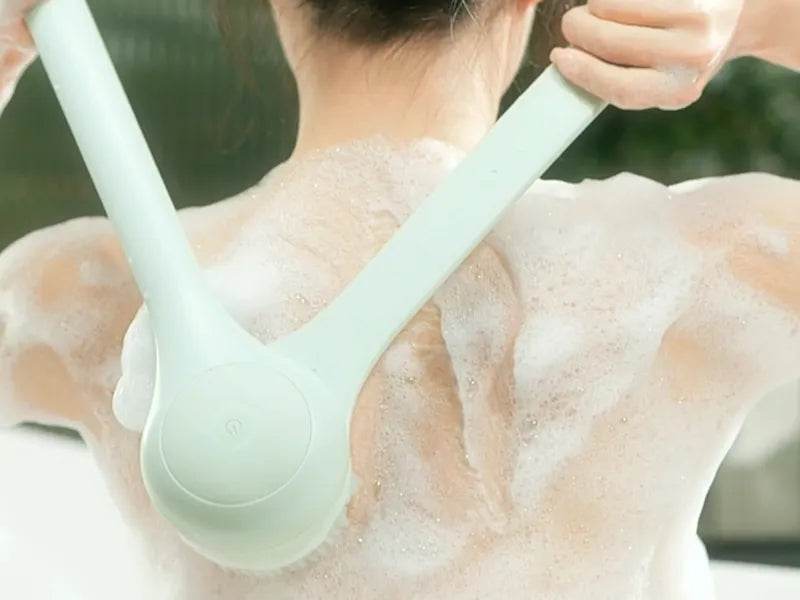
You fix this problem by upgrading your tool design. You buy an ergonomically curved, long-handled brush. The curved handle wraps around your shoulder perfectly. The brush head lands exactly on your spine. You just rest your hand on the grip. The natural weight of the tool provides the perfect amount of light pressure. You can also use a flexible silicone strap with dual handles. You hold one handle in each hand. You pull the strap gently side to side across your back. The tool conforms to your body shape completely. You remove the dirt effectively without ever straining your muscles or damaging your delicate skin barrier.
| Tool Design | Leverage Quality | Skin Safety Level |
|---|---|---|
| Straight Short Stick | Very Poor | Low (forces hard pushing) |
| Curved Long Handle | Excellent | High (uses natural weight) |
| Dual Handle Strap | Excellent | High (wraps around body) |
How should you care for a body brush?
You leave your wet brush inside the shower cabin. Black mold grows deep inside the bristles. You rub this dangerous bacteria directly onto your back.
You care for a body brush by rinsing it thoroughly and hanging it outside the humid shower to dry. You must disinfect natural bristles weekly with diluted rubbing alcohol or antibacterial soap. You should replace natural brushes every one to three months to ensure perfect hygiene.
Maintaining Perfect Hygiene
I audit the clinical safety of beauty tools constantly. Your bathroom environment poses a massive threat to your skin health. A warm, humid shower cabin breeds bacteria rapidly. You wash your body with a dirty brush. You harbor bacteria inside wet bristles. You push this mold right into your open back pores.
You must implement a strict brush care routine. Synthetic or silicone brushes offer the easiest maintenance. They repel water naturally. You just rinse them and shake them dry. Natural bristles demand much more attention. You must rinse a natural brush thoroughly after every single use. You shake off all the excess water forcefully. You hang it outside the bathroom in a dry, well-ventilated room. You must also disinfect the bristles once a week. You soak the head in diluted rubbing alcohol or strong anti-bacterial soap. You kill the hidden mold completely. Finally, you must throw the natural brush away every one to three months. You cannot save an old, degraded brush.
| Brush Material | Drying Speed | Replacement Schedule |
|---|---|---|
| Medical Silicone | Very Fast | 6 to 12 Months |
| Synthetic Nylon | Medium | 3 to 6 Months |
| Natural Bristle | Very Slow | 1 to 3 Months |
Can a body brush cure back acne?
You suffer from chronic back acne for years. You hope a new physical scrub brush will magically cure your skin. You end up deeply disappointed.
A body brush cannot cure back acne. Back acne stems from internal hormones, heavy sweat, and bacteria. A brush only removes surface dead skin and oil. You must combine gentle physical exfoliation with clinical chemical treatments like benzoyl peroxide to truly clear chronic breakouts.
Understanding Clinical Limitations
I bridge the gap between clinical-grade efficiency and home spa tools. I must speak honestly about what physical tools can actually achieve. A body brush is a mechanical device. It sweeps the surface of your skin. It cannot change your internal biology. Back acne happens for complex reasons. Your hormones surge. Your pores overproduce thick sebum. Bacteria breed deep under the skin barrier.
A brush cannot reach the bottom of an infected pore. It cannot kill acne bacteria. Therefore, a body brush cannot cure your back acne. It serves only as a powerful preventative measure. It stops the initial blockage from forming. If you want a real cure for active acne, you need medicinal help. You buy a body wash containing benzoyl peroxide or salicylic acid. These chemicals penetrate the skin deeply. They dissolve the oil plugs and kill the trapped bacteria. You use your gentle brush on clear days. You use your chemical wash on breakout days.
| Acne Factor | Brush Effect | Chemical Wash Effect |
|---|---|---|
| Surface Dead Skin | Removes perfectly | Dissolves slowly |
| Deep Pore Bacteria | Cannot reach | Kills effectively |
| Internal Hormones | Zero effect | Zero effect |
Should I brush directly over a breakout?
You see a massive whitehead on your shoulder. You drag your firm brush right over the top of it. You scream in sudden pain.
You must never brush directly over an active breakout. Mechanical scrubbing ruptures inflamed lesions and creates microscopic open wounds. This violent action spreads trapped bacteria across your back and severely delays your natural healing process. You should always bypass active pimples entirely.
The Danger of Physical Trauma
I stress-test skin care routines to find failure points. Brushing over an active breakout is the biggest failure point of all. A pimple acts as a tiny biological containment zone. Your body traps the bad bacteria inside a thin wall of white blood cells. This wall is extremely fragile.
You drag a firm brush over this containment zone. The bristles hook onto the swollen skin. They rip the protective wall completely open. You cause immense physical pain. More importantly, you release the trapped bacteria directly onto your healthy skin. The shower water washes this infected fluid down your back. It settles into fresh, open pores. You wake up the next morning with five new pimples. You also leave a raw, bleeding wound where the original pimple stood. This wound turns into a dark, permanent acne scar. You must treat your skin like a minefield. You use your brush on the clear, smooth areas. You avoid the red, angry bumps completely.
| Action on Pimple | Physical Result | Long-Term Consequence |
|---|---|---|
| Brushing Over | Tears skin open | Dark scars and more acne |
| Chemical Wash | Dries out oil safely | Faster healing |
| Avoiding Entirely | Keeps barrier intact | Natural resolution |
Is the Soft Cleansing Body Brush a silicone scrubber?
You want the softest tool for your irritated back. You buy a product with confusing marketing. You end up with a harsh nylon brush instead.
The Soft Cleansing Body Brush typically refers to tools with ultra-fine synthetic or natural plant fibers, not silicone. A true silicone scrubber features thick, molded rubber nodes. You must check the exact material specifications to ensure you buy the correct, non-porous tool for your sensitive skin.
Decoding Brush Materials
I spend years sourcing medical-grade, hypoallergenic materials. The beauty industry uses terrible, over-hyped marketing noise. They call everything a "soft cleansing brush." This confuses customers completely. You must understand the physical difference between fiber brushes and silicone scrubbers.
A standard soft cleansing body brush uses thousands of ultra-fine filaments. We often use advanced plant fibers or highly processed nylon for these tools. They feel like a soft paintbrush. They create a massive, foamy lather. However, they are not silicone. A silicone scrubber uses a completely different manufacturing process. We mold food-grade or medical-grade silicone into thick, flexible nodes. Silicone contains zero fibers. It is entirely non-porous. It dries in three minutes. It never harbors bacteria. If you have severe, acne-prone skin, I always recommend the true silicone scrubber. It offers the absolute lowest friction. It provides the safest, most hygienic wash for a highly reactive back.
| Tool Name | Material Used | Bacteria Resistance |
|---|---|---|
| Soft Cleansing Brush | Fine Plant Fibers | Low (requires deep washing) |
| Silicone Scrubber | Molded Rubber Nodes | Extremely High (non-porous) |
Conclusion
Use an ergonomic body brush to gently clear unbroken back skin, but avoid active breakouts completely. Clean your tools thoroughly and switch to chemical exfoliants for severe acne.